Haemorrhoidal disease: a widespread condition
Treat your haemorrhoidal disease with pain-free sclerotherapy and noticeably improve your quality of life.
Unpleasant and underestimated: symptoms and prevalence
Burning, itching and bleeding – haemorrhoidal disease is a common condition that affects around 70% of adults at some point in their lives. But despite how common haemorrhoidal disease is, many sufferers are reluctant to speak to their doctor about it. The condition is often addressed only when the discomfort becomes unbearable. Yet early intervention can not only ease symptoms but also prevent complications and significantly improve quality of life. For the doctors involved, discussing these concerns and examining the intimate area is completely routine.
The cause of haemorrhoidal disease is often a congenital weakness of the connective tissue. The most significant risk factor for its development is incorrect bowel habits. This is characterised by straining during bowel movements and prolonged reading on a smartphone or newspaper while on the toilet, as this posture places considerable strain on the haemorrhoidal tissue. Other risk factors include constipation caused by a low-fibre diet, frequent diarrhoea and strain on the pelvic floor resulting from increased pressure in the abdominal cavity. This can occur, for example, during pregnancy, as well as with strength training or obesity. A sedentary lifestyle further promotes the development of haemorrhoids.
Haemorrhoids: a sensitive function essential for continence
Haemorrhoids are a natural part of the body. They are cushions of blood vessels that are arranged in a ring beneath the intestinal mucosa. Along with the sphincter muscles, they help seal the rectum. Problems arise when these vascular cushions enlarge and begin to cause symptoms. This is referred to as haemorrhoidal disease.
Depending on the extent of the changes, haemorrhoidal disease is classified into four grades of severity.
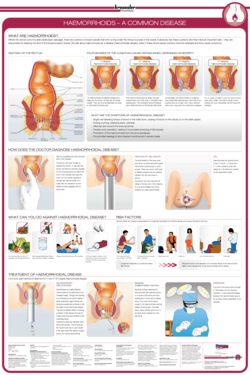
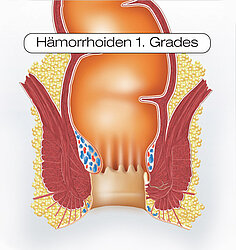
In grade 1 haemorrhoidal disease, the haemorrhoids are slightly enlarged and protrude into the intestine but are not visible from the outside. At this stage, the disease can only be diagnosed by a doctor using a proctoscope, a device for examining the anus.
If the haemorrhoids continue to enlarge, they are pushed out of the anus during bowel movements. After a bowel movement, the prolapsed haemorrhoids return to their normal position on their own. This is referred to as grade 2 haemorrhoidal disease.
In grade 3 haemorrhoidal disease, the haemorrhoids no longer retract on their own after a bowel movement and can only be pushed back manually with a finger. Prolapse can also occur during heavy physical exertion or prolonged running.
In the most severe form, grade 4 haemorrhoidal disease, the prolapsed haemorrhoids can no longer be repositioned with a finger. The haemorrhoids stay permanently outside the anus. However, it is important not to let the condition progress to this stage.
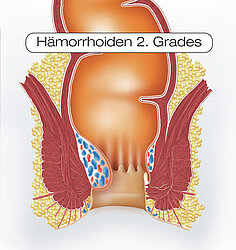
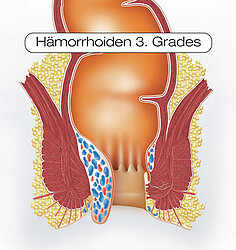
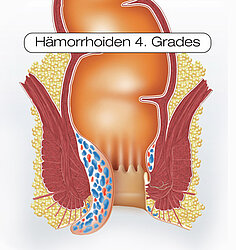
How to recognise haemorrhoids
The most common sign of haemorrhoidal disease is bright red bleeding seen during or shortly after a bowel movement, whether in the toilet bowl, in the stool or on the toilet paper. Bleeding does not necessarily occur after every bowel movement.
Other symptoms may include: Itching, burning, stinging, wetness, feeling of incomplete bowel emptying, foreign body sensation, skin inflammation around the anus and the prolapse of haemorrhoids from the anus. In severe cases, painful inflammation of the prolapsed haemorrhoids and episodes of uncontrolled bowel movements may occur. These symptoms can occur alone or together and are often very uncomfortable, with a marked impact on well-being.
Examination by a doctor
The doctor will first ask about your medical history and current symptoms. This is neither a taboo topic nor an uncomfortable one for the doctor, as they routinely encounter such conditions. After the consultation, the doctor will begin the examination.
The doctor first inspects the anus externally, followed by a digital examination of the rectum.
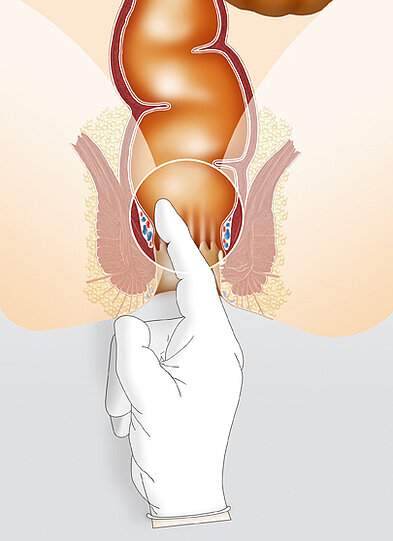
This allows the doctor to feel for any nodular changes or constrictions and to assess the tension of the sphincter muscles with their finger. Haemorrhoids are usually not palpable. An examination of the anal canal is therefore required, performed using a special instrument such as an anoscope or proctoscope. A proctoscope is a narrow tube, roughly 10 cm in length, that is gently inserted into the rectum. While some may experience mild discomfort, the examination is generally painless. Through an opening in the proctoscope, the doctor can examine the inside of the rectum in detail and determine whether haemorrhoidal disease is present. The rectal area is also examined to ensure that other conditions can be ruled out.
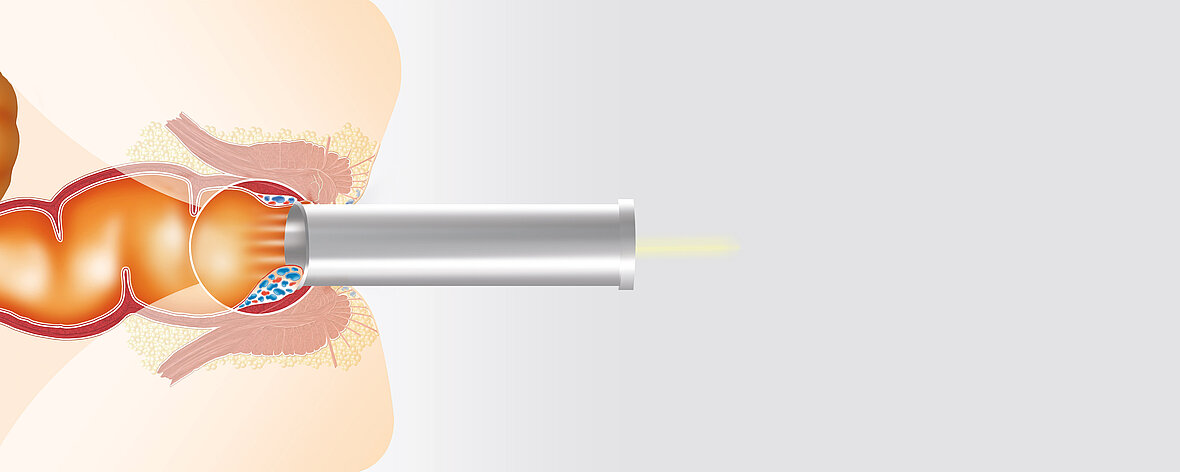
Sclerotherapy: a pain-free solution
Sclerotherapy is a particularly effective and gentle treatment option. In this minimally invasive procedure, a drug solution, the sclerosing agent Aethoxysklerol®, is injected into the enlarged haemorrhoids or into the area surrounding the supplying vessels via a proctoscope. This sclerosing agent leads to a desired reaction in the tissue with subsequent shrinkage of the haemorrhoids and fixation of the haemorrhoidal tissue to the underlying tissue. This effectively resolves the symptoms.
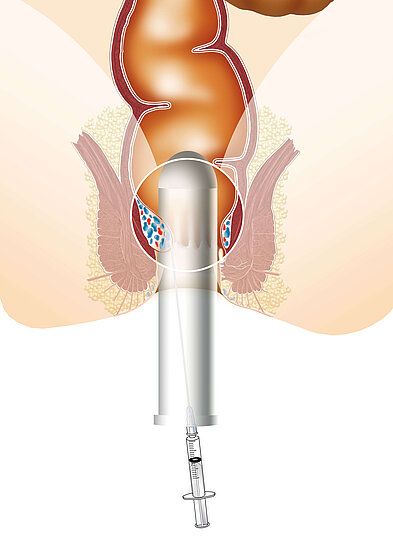
As there are no pain nerves in this part of the intestine, the treatment is virtually painless and requires no anaesthesia or downtime. Sclerotherapy takes only minutes, allowing you to return to normal life immediately – with greater comfort and fewer symptoms.
This treatment preserves the haemorrhoidal tissue required for the rectum's fine sealing mechanism. A further treatment session may be required after a few weeks.
Who is the right doctor for this?
You should always see a doctor if you notice blood in your stool or toilet paper. In most cases, the bleeding is caused by haemorrhoids or other harmless conditions. However, in rare instances it can be a sign of a more serious illness, which only a doctor can rule out with certainty.
Your family doctor may refer you to a specialist in rectal diseases, known as a proctologist or coloproctologist.
You can find a suitable doctor using the professional association's physician search or by entering 'proctology' along with your location in Google
FAQs
Are haemorrhoids dangerous?
Haemorrhoids are vascular cushions situated where the rectum meets the anal canal. Everyone has these vascular cushions, which are responsible for the fine sealing of the rectum. The term haemorrhoidal disease (often simply called haemorrhoids) is used only when these cushions become pathologically enlarged and cause discomfort. Although this condition is unpleasant, it is not dangerous and can be treated effectively, particularly in the early stages.
What symptoms can occur?
Typical symptoms include bright red bleeding from the anus during or immediately after a bowel movement, itching, burning, stinging, wetness, a feeling of incomplete emptying or a foreign body sensation, skin irritation around the anus and protruding haemorrhoids. In severe cases, painful inflammation of the prolapsed haemorrhoids and episodes of uncontrolled bowel movements may occur. The symptoms are very unpleasant and can significantly impair well-being.
What causes haemorrhoidal disease?
Haemorrhoidal disease is often caused by connective tissue weakness and is further promoted by several risk factors: A low-fibre diet, improper bowel habits such as straining or reading on the toilet, constipation, pregnancy, frequent heavy lifting, lack of exercise and being overweight.
When should you see a doctor?
You should always see your family doctor if you notice blood in your stool or toilet paper. In most cases, the bleeding is caused by haemorrhoidal disease or other harmless conditions. However, in rare instances it can be a sign of a more serious illness, which only a doctor can rule out with certainty. Your family doctor may refer you to a specialist in rectal diseases, known as a proctologist.
How are haemorrhoids diagnosed by a doctor?
The doctor first inspects the anus externally, followed by a digital examination of the rectum. This allows the doctor to feel for any nodular changes or constrictions. Haemorrhoids are usually not palpable. An examination of the anal canal is therefore required, performed using a special instrument such as an anoscope or proctoscope. While some may experience mild discomfort, the examination is generally painless. Through an opening in the proctoscope, the doctor can examine the inside of the rectum in detail and determine whether haemorrhoidal disease is present.
How are haemorrhoids treated by a doctor?
In the early stages, symptoms may be relieved with ointments, creams, pastes, suppositories, anal tampons and lotions.
However, these treatments only offer short-term relief. The haemorrhoidal disease itself continues to progress.
Sclerotherapy with Aethoxysklerol® is a well-established and successful option for grade 1–2 haemorrhoidal disease. The procedure can be carried out on an outpatient basis and is covered by statutory health insurers.
How can you manage haemorrhoidal disease yourself?
Avoid straining during or immediately after a bowel movement.
Get plenty of exercise
Even if you spend much of the day sitting in the office, move around as often as you can. Avoid the lift and use the stairs. If possible, leave the car at home and walk instead. In addition, you can also train your sphincter muscles while sitting: tighten the anus as if trying to prevent a bowel movement, count to five, then relax. Perform the exercise about 30 times and repeat it several times daily. Consistent, long-term practice is key.
Engage in sport
Gymnastics, Nordic walking, hiking, cycling and swimming are recommended. By contrast, jogging and tennis are less suitable, as they place greater strain on the pelvic floor and may worsen symptoms.
Eat a healthy diet
Keep an eye on your weight and opt for a high-fibre diet. Make sure you drink enough fluids, ideally about two litres daily. Consume alcohol and coffee in moderation.
If possible, avoid laxatives, as they can make the bowels sluggish and may also promote haemorrhoids.
Our product for the sclerotherapy of haemorrhoidal disease
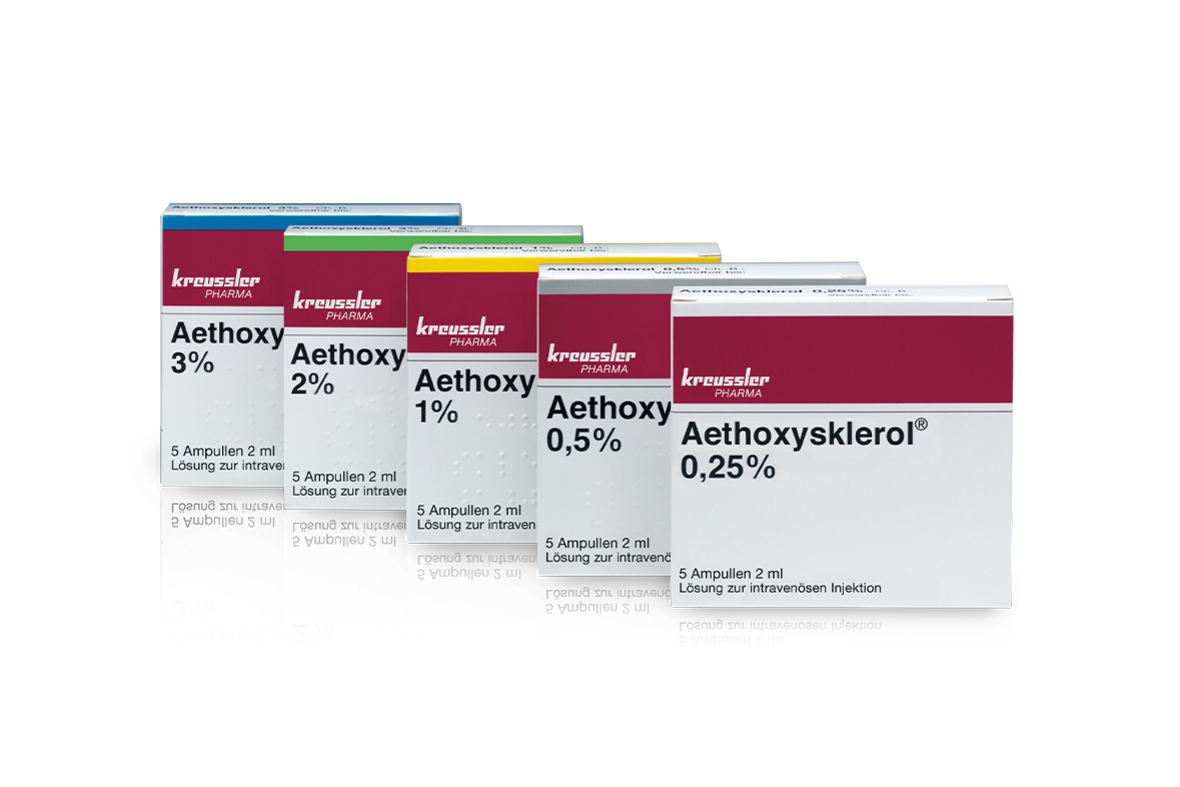
Aethoxysklerol®
In line with the German Advertising in the Health Care System Act (HWG), detailed information about this product may only be provided to a designated professional group. This includes doctors, dentists, vets, pharmacists and authorised pharmaceutical retailers.
Please find general information on varicose veins, spider veins and available treatment options here .
Downloads
Additional important information is available for download here: